
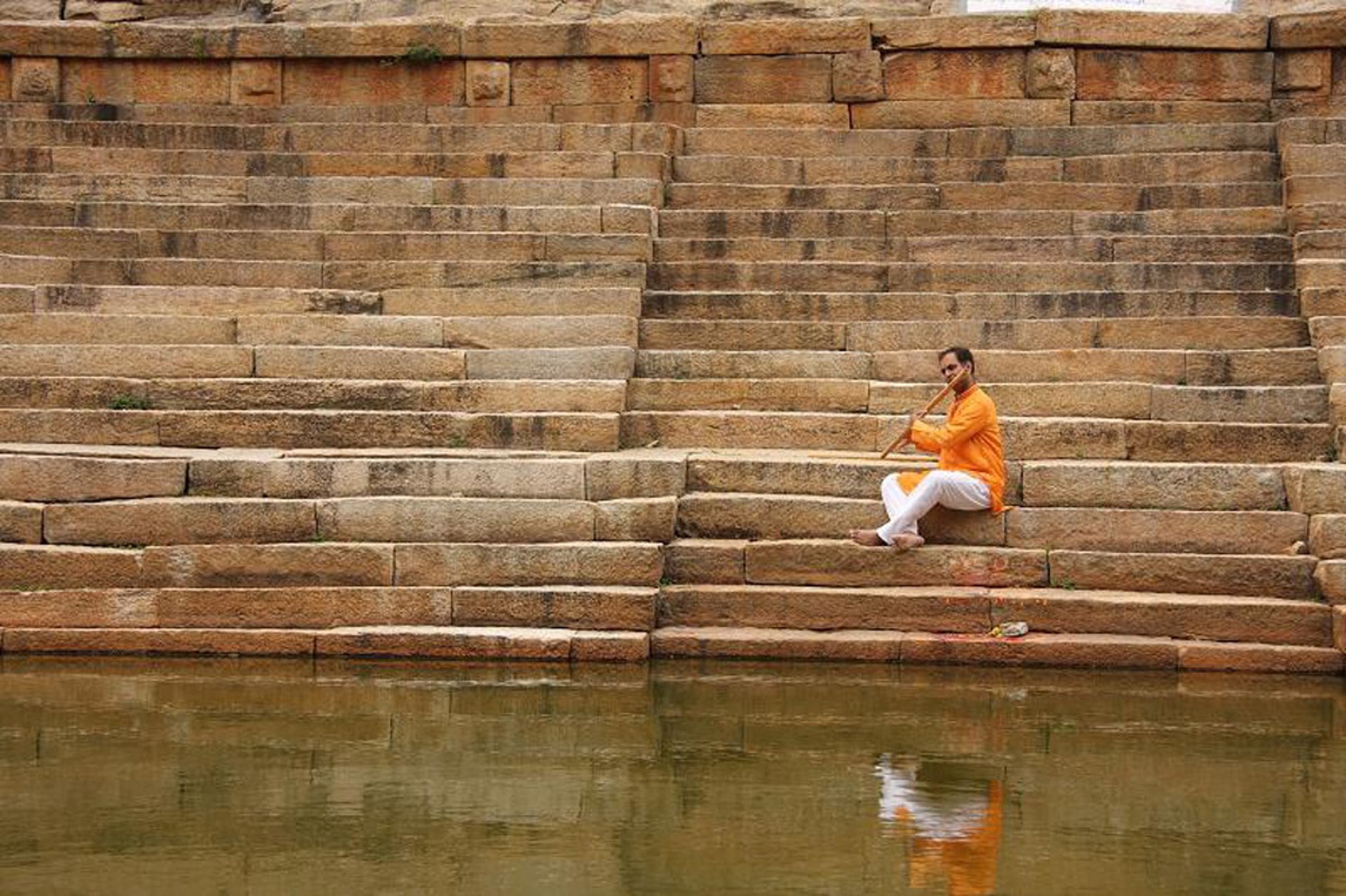
Ravi Shankar Mishra
Ravi Shankar Mishra is one of the finest makers of Hindustani Bansuri flute or Indian Bamboo flute. He learnt the art of Bansuri flute making from his father Sri Dinesh Chandra Mishra. In his endeavour to craft the Bansuri flute for his own playing, he mastered the art of Bansuri flute making. The hallmark of quality in his bamboo flutes is well reflected in the precision and a skillful workmanship evolved over the years of dedication and hard work. Ravi’s Bansuri flute making was blessed by the flute maestro and one of the greatest Bansuri bamboo flute makers, late Pt. Devendra Murdeshwar, who revealed to him the intricacies and dynamics of ‘bamboo’ and ‘wind’ leading towards near perfection.
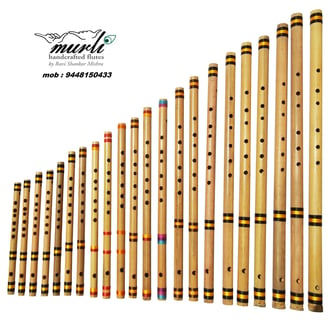
Bansuri flutes - Bamboo flutes made by Ravi are of top quality - technically accurate and aesthetically beautiful. Each flute is made with dedication and passion that is required to turn out the most exquisite and beautifully resonate bansuri flutes.
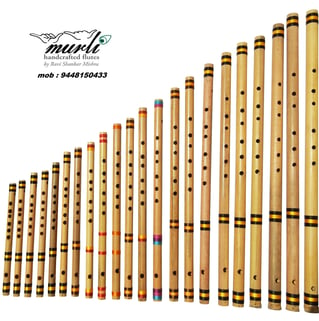
Bamboos which Ravi selects personally are specially hand picked from Assam and seasoned, before the process of turning a piece of bamboo into the wonderful bansuri flute starts. Holes are punched into the bamboo and then it is fine tuned to perfection. He specializes in making bansuri with seven holes which was invented and propagated by Pt. Pannalal Ghosh, where the seventh hole has a unique significance in producing meends. The beauty of these flutes is that, the flautists who do not use the seventh hole, can simply ignore it and play it like a flute with six holes, thus making the flute actually comprehensive.
Ravi’s flutes are much in demand in India and abroad and are played by many renowned artists and top ranking performers. With flautist Pt. Nityanand Haldipur himself playing Ravi’s flutes, comes the certification of the quality. His flutes are much preferred due to its tonal quality and the comfortable fingering it offers. His bansuris are a compliment to his lineage and are keeping alive the rich legacy, tradition and memories of his gharana.
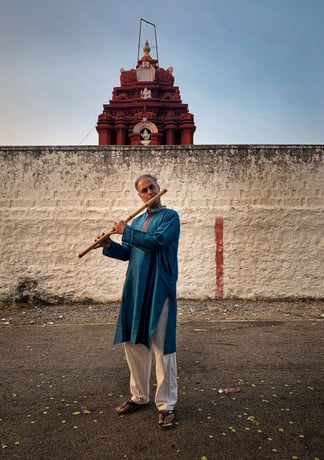
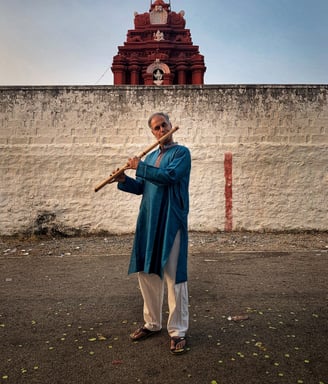
Indian classical bansuri flutist, bansuri teacher and maker
Bansuri Flutes, Classes and Music - Online Shop
For India inquiries please contact Ravi by email or phone: +91 94481 50433.
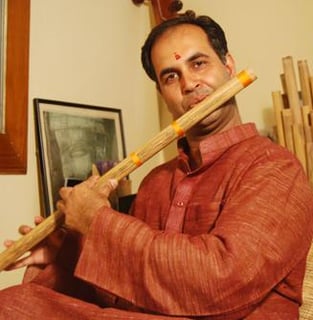
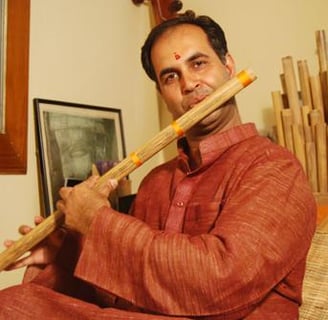
Learn how to play bansuri flute from Ravi Shankar Mishra
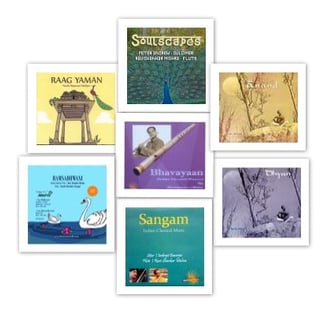
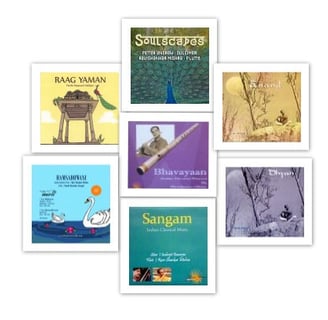
Bansuri music albums by Ravi Shankar Mishra
Handcrafted bansuri flutes made by Ravi Shankar Mishra
Message from Bansuri Maestro, Nityanand Haldipur
Ravi Shankar Mishra: A Maestro of Melody and Craftsmanship
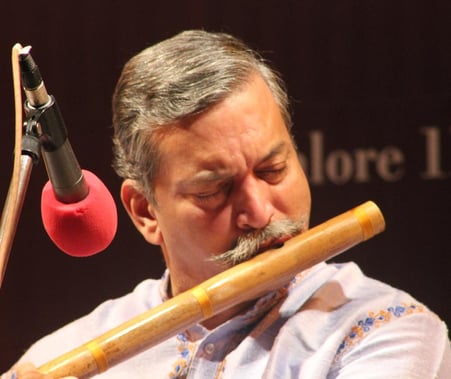
I am delighted to extol the virtues of my esteemed disciple, Ravi Shankar Mishra, a virtuoso flute player and master craftsman of Hindustani classical music. Under my guidance, he has blossomed into a consummate artist, renowned for his soul-stirring performances and exquisite flute-making skills.
Ravi's flutes are a testament to his meticulous craftsmanship and innate musicality. His keen ear for pitch and tone enables him to achieve perfect tuning, rendering each flute a masterpiece. I proudly acknowledge that the flutes I play in concerts are all crafted by his skilled hands.
His selection of bamboo, the very lifeblood of the flute, is impeccable. Only the finest, highest-quality bamboo is chosen, ensuring that each flute is a work of art. The precision with which he measures and crafts the holes is a marvel, providing ease and comfort to the player.
As his guru, I am honored to bless Ravi Shankar Mishra, wishing him unparalleled success as a top-notch flutist and the most sought-after flute maker in the country. May his music continue to enthrall and inspire generations to come!
Nityanand Haldipur
Message from Lyon Leifer
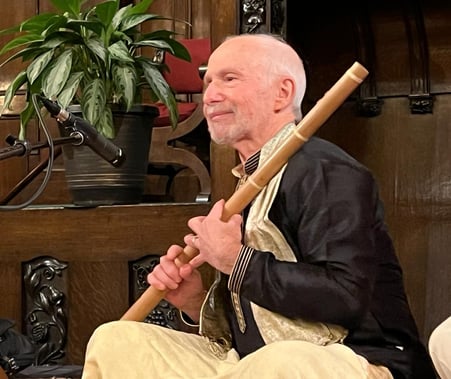
Ravi Shankar Mishra is a first-rate bansuri artist in Maihar Gharana, trained by Pt. Nityanand Haldipur, and maker of highest quality bansuris. They feature excellent intonation, response, and range through a solid two and a half octaves. They are designed to most effectively enable use of the critical seventh finger hole. That enables full sounding tivra madhyam at the instrument’s low end. It also produces much smoother bridging of the register break in both up and down directions. This is a critical element in producing beautiful aalaap in numerous important ragas... continue reading

Ravi Shankar Mishra
Handcrafted bamboo flutes,
online classes and bansuri music
by Ravi Shankar Mishra
Phone:
Email:
© 2009-2025 Ravi Shankar Mishra | BansuriWorld.com All rights reserved.
Mobile: +91 94481 50433
WhatsApp:
Mobile: +91 80888 71357